Big Island, Hawaii · Before you drive in
What to wear and bring to Hawaii Volcanoes National Park
You are not dressing for one place. You are dressing for a rainforest, an open crater floor and a windswept coast road, in the same afternoon.
Most packing lists for this park are written by places that rent you a room nearby. They are not wrong, they are just generic: bring a jacket, bring sunscreen, bring comfortable shoes. Nothing in them tells you what the park will actually do to you.
So here is the list with the reasons attached, because the reasons are what make you pack the thing.
What is the weather like at Hawaii Volcanoes National Park?
Changeable, and not one climate. The park sits at roughly 4,000 feet, so it is cooler than the coast you drove up from — if you set off from Kona or Hilo in beach clothes, you underdressed before you started.
In one afternoon you can pass through three different environments:
- Rainforest, on the short walk to the lava tube — damp, dripping, cool.
- An open crater floor — black rock with no shade at all, which is hot and glaring the moment the cloud breaks.
- The coast road — exposed, and windy enough to take a loose hat off your head.
The park's own advice is to be ready for hot, dry, wet and windy conditions on the same visit. Take that literally. Showers arrive fast and leave fast, and the sun that follows them is strong.
What should you wear to Hawaii Volcanoes National Park?
Every item here is here because of something specific.
- Long sleeves and long trousers. Not for the sun — for the rock. The lava is sharp, closer to broken glass than to stone, and a simple stumble takes skin off. Bare arms and legs are the difference between a scrape and a wound that ends your water sports for the trip.
- Wet wipes and plasters. The other half of the same rule. Cuts here come with black grit in them, and there is no tap and nobody selling anything for hours. This is the one item no other packing list carries, and it is the one you will be glad of.
- Closed shoes with grip. The trail is steep and rocky and the rock is loose in places. Sandals are not enough. Neither are flat soles with no tread.
- A hat that fastens. A brimless cap or a chin strap. On the coast road a loose sun hat leaves, and going after it on that ground is exactly how people get hurt.
- Nothing that drags. Long hems, loose straps and trailing bags all catch on lava.
- A light waterproof layer. Thin, packable, and worn over the long sleeves rather than instead of them.
- Sunscreen. The crater floor has no shade whatsoever, and cloud there is not protection.
How long is the Kīlauea Iki Trail, and do you have to do the whole thing?
This is the walk almost everyone comes for — down through rainforest and out across the floor of a crater that erupted in 1959. It is also where people misjudge their day, because the length depends entirely on where you start.
| Starting from | Distance | Time |
|---|---|---|
| Kīlauea Iki Overlook | 3.3 miles (loop) | 2–3 hours |
| Kīlauea Visitor Center | 5.3 miles | 3–4 hours |
| Devastation Trailhead | 6 miles | 4–5 hours |
Same trail, and the wrong starting point nearly doubles it. Either way there is 400 feet down and 400 feet back up, and the park rates the hike moderate to challenging — steep and rocky.
You do not have to do the loop. The part worth coming for is the descent and the walk out onto the crater floor. If your time or your legs are limited, go down, cross a little of the floor, and come back up the way you came. That is a complete experience, not a failed one.
Decide this before you set off rather than halfway down, because the 400 feet you descend are the 400 feet you have to climb, and the climb comes at the end of the day when it is hottest and you are emptiest.
Is there anywhere to eat in Hawaii Volcanoes National Park?
One place: Volcano House, the single hotel inside the park, which has a restaurant. Past that, and Chain of Craters Road runs 19 miles past that, there is nothing at all — no shop, no vending machine, no water.
I brought water, but not enough of it. What I had went quickly, and there was nowhere to get more: I walked down into the crater and back up, then drove the coast road to the sea arch for sunset, and came out tired, thirsty and hungry. By the time I found anything to eat it was 9 p.m.
That is the trap in this park. It is not that people arrive with nothing — it is that a normal bottle is a normal amount for a normal day out, and this is a 400-foot climb on bare black rock with no tap at the top. Bring more water than feels sensible, and something to eat, and assume you will not pass a shop after you drive through the gate.
Is there cell service in Hawaii Volcanoes National Park?
Not in much of it. Download an offline map before you drive in.
This costs one minute at the hotel and is the single cheapest thing on this page. Without it you are navigating a park the size of a county on memory, and the road to the coast has no signposted way back other than the one you came in on.
How long does the whole day take?
Longer than people book for. Put the pieces together:
- The Crater Rim stops: an hour or two, depending on how many you take.
- Lava tube and Kīlauea Iki: 2 to 3 hours if you do the loop, less if you turn back at the floor.
- Chain of Craters Road to the coast and back: most of an afternoon, because you will stop, and it is 19 miles each way.
That is a full day, 5 to 8 hours, and it ends at sunset if you go as far as the sea arch. Half a day does not fit it. What normally happens is that a half day gets booked, the coast road gets cut, and the best part of the park is the part that gets dropped.
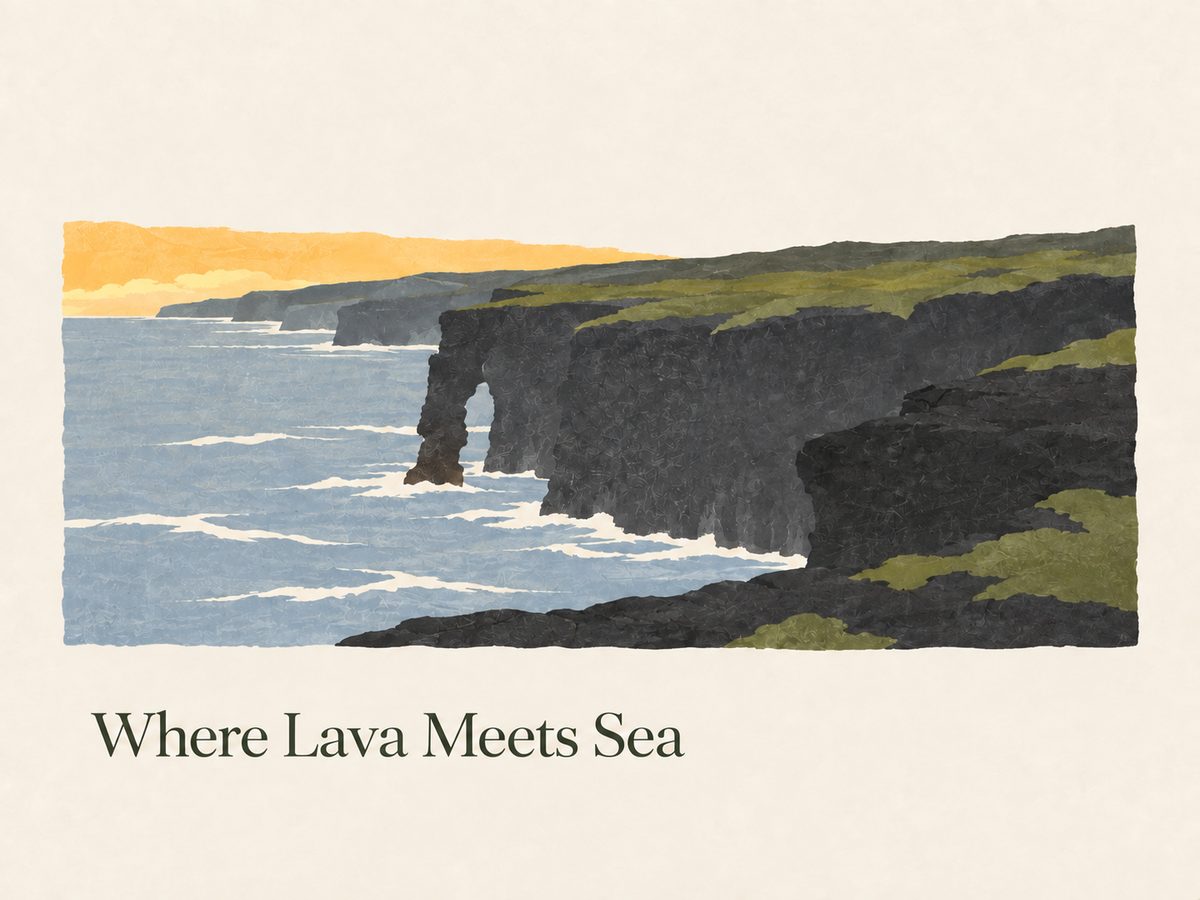
The part that does not fit in a backpack
Everything above fits in a bag. The thing that does not is the day itself — this park wants a whole one, and that day has to come out of something else you had planned.
The Big Island Plan Checker takes the days you are about to book and the list you want to do, checks them against verified drive times and the park's own hours and rules, and tells you what fits, what has to go, and what to cut first. Five questions, about 3 minutes.
The first itinerary it told to cut something was mine.
Sources. Kīlauea Iki trail distances, times, elevation change and difficulty, the what-to-bring guidance and the note on parking are from the National Park Service, read September 10, 2026. Volcano House is the only lodging inside the park. Personal details are from my own visit in August 2026. Fees, hours, trail closures and eruption status change — recheck before you travel.
Working out where to sleep? Where to stay for Hawaii Volcanoes National Park on a short trip.
More Big Island guides · Who writes this · Terms